
Meet the owner
Andreas Liebenberg
Andreas has owned Bateleur since 1991 and has shaped every part of it, from the design of the camp to guiding guests on specialist itineraries. With over 20 years in conservation and a background in tracking and anti-poaching, he has twice received the Timbavati Private Nature Reserve’s conservation award for the most eco-sensitive landowner.
A Lion’s Passion: Lion Mating Behaviour in the Timbavati
The open safari vehicle slowed as the guide spotted a magnificent male lion and a beautiful lioness resting in the early morning African sunshine. At first, the pair appeared relaxed, seemingly oblivious to the vehicle’s presence. However, it soon became apparent that the lioness was displaying signs of being receptive to mating, offering a fascinating glimpse into the reproductive behaviour of these powerful predators.
The lioness began rubbing herself against the male, rolling on the ground, and moving close to him. Occasionally, she positioned herself in a way that encouraged him to respond. Gradually, the male became more attentive to her movements.
The lioness was in oestrus, the fertile period during which she is receptive to mating. This phase can last several days, during which a lion and lioness may temporarily separate themselves from the rest of the pride to mate repeatedly.
The male eventually rose to his feet and approached the lioness from behind. He mounted her, gripping the loose skin at the back of her neck with his teeth to help hold her in position. The mating itself was remarkably brief, lasting only a few seconds before the male dismounted.
Almost immediately, the lioness turned towards him, snarling and swatting at him. Although this reaction might appear aggressive, such behaviour can be a normal part of the mating process. The male moved away, and the pair settled down again, resting quietly in the grass before the sequence began anew.
This pattern of brief mating followed by periods of rest is characteristic of lion reproduction. During the lioness’s receptive period, the pair may mate repeatedly, often at intervals of around 15–30 minutes, although the timing varies considerably. They can continue this behaviour for several days, sometimes mating dozens of times in a single day.
The frequency of mating serves an important biological purpose. Lions are induced ovulators, meaning that mating stimulates hormonal processes that can trigger the release of eggs. Repeated mating helps increase the chances of successful fertilization.
Throughout the encounter, the lion and lioness moved through a familiar rhythm of courtship, mating, separation, and rest. Their behaviour offered a remarkable demonstration of the natural instincts that govern reproduction in the wild.
For the Bateleur guests who were fortunate enough to witness such an encounter in early October, the experience provided far more than an absorbing wildlife sighting. It provided personal insight into a fascinating aspect of lion behaviour, highlighting the intricate biological processes that are all part of the continuation of one of Africa’s most iconic species.
Recent Sightings
The first full week of October produced a wide variety of meaningful experiences and encounters with the wildlife and birdlife of the Timbavati, creating a collection of memories for the Bateleur guests that will probably last a lifetime.
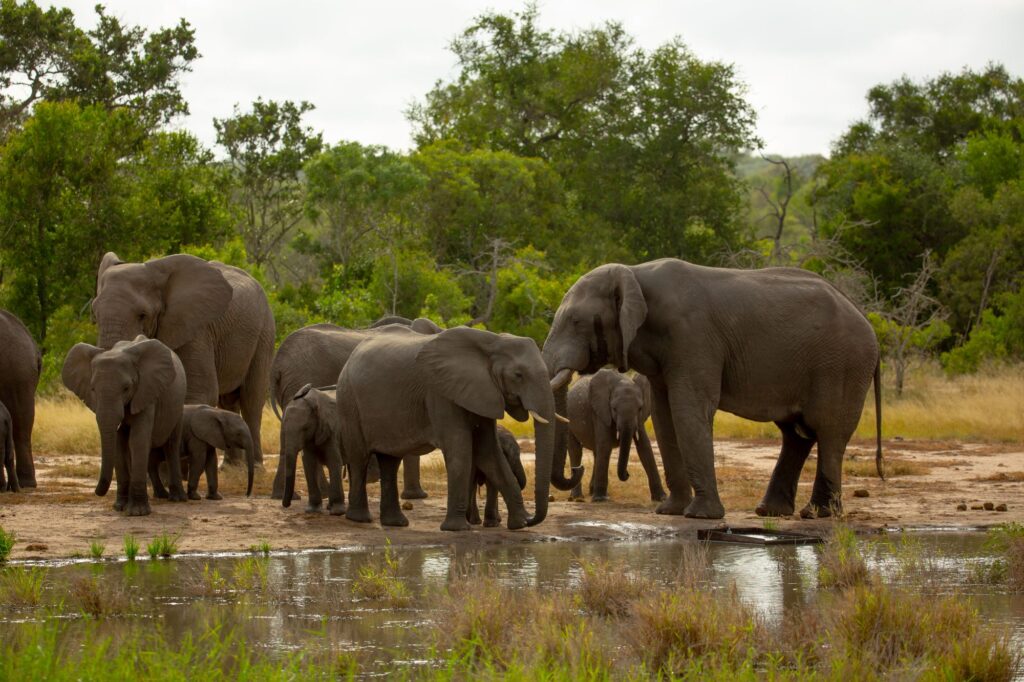
A rhino bull grazing towards us as we stood next to the vehicle, enjoying our sundowner drinks. A large puffadder lazily crossing the road as we made our way back to camp. A lone lioness fiercely guarding her baby buffalo kill. A small owl dissecting its rodent kill after dark. The mating pair of lions, suspected to be a lioness from the Mayambula Pride and a male from the Nkhombe coalition. A herd of about 40 elephants ambling down to Marco’s Dam for a drink in the morning sunshine. A very relaxed female leopard, posing in the tree with her impala kill for three successive days. These were just some of the up-close wildlife encounters enjoyed in a very special part of the Timbavati Private Nature Reserve.
The heat resulted in a lot of raptor activity, including quality sightings of a Martial Eagle, a Verreaux’s Eagle-owl, and a Brown Snake Eagle. That didn’t deter several of our more active guests from joining their guide and tracker on interpretive morning walks that revealed the finer details of life in the African bush. Perhaps the highlight was an extensive bush walk that included tracking both lion and rhino; in each case, our quarry proved elusive, but the scenery and bush experience were incredible, and our guests gained personal insight into the art of tracking big game on foot.
Plains game was abundant throughout the week, and we enjoyed multiple high-quality sightings of elephants, rhinos, and buffalo. There is a wonderful contrast between a large breeding herd of buffalo, which most often seems placid and unthreatening, and a menacing group of brawny old dagga boys that always look ready to rumble. But make no mistake, you wouldn’t want to find yourself on the wrong side of either bevy of hefty bovines.
The African Wild Dogs and Cheetah were both conspicuous by their absence, and it was also a relatively quiet week for hyena sightings. But our guests were treated to several sightings of the big cats, which seem to be very comfortable lately with the idea of providing us with a window into their brutally beautiful world.
It is truly wonderful to enjoy up-close sightings of individual lions and leopards, either on the prowl or relaxing in splendour. And there were several occasions where individual big cats, or occasionally pairs, were the focus of our guests’ attention for extended periods. But there is nothing quite like being in close proximity to a full pride of regal lions, who seem to be able to effortlessly exert dominance over their surroundings just by simply being there. During the week, our guests had three separate encounters with 5 lionesses from the Mayambula Pride, as well as 2 beautiful sightings of the full Sark Breakaway Pride, including the cubs.
Spring is in full swing in the Timbavati Private Nature Reserve, and it shouldn’t be long before the thunderstorms become more frequent and the bush starts to become both thicker and greener. Whether you’re out in the bush on foot, learning how to interpret the tracks and signs that were left during the night, or observing large herbivores and powerful predators from the comfort of the open safari vehicle, this is the place where perspectives are changed and a deep appreciation of the magnificent wonder of creation is gained.
Breathe Africa – Bateleur Safari Camp.