
Meet the owner
Andreas Liebenberg
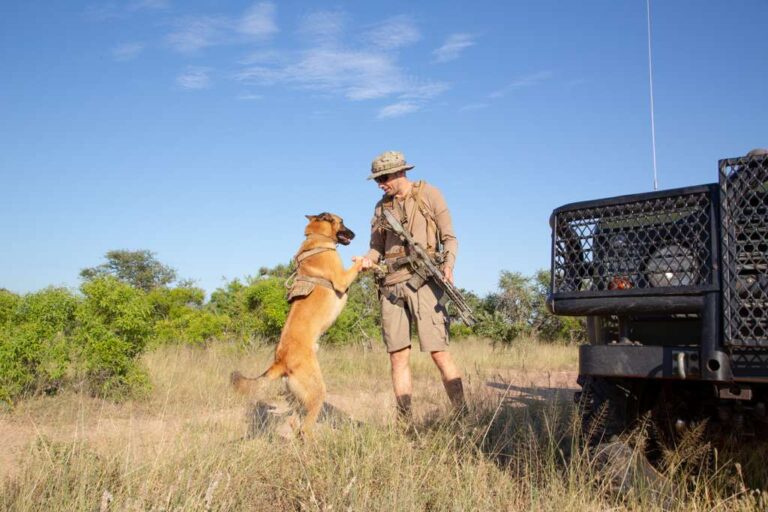
Andreas has owned Bateleur since 1991 and has shaped every part of it, from the design of the camp to guiding guests on specialist itineraries. With over 20 years in conservation and a background in tracking and anti-poaching, he has twice received the Timbavati Private Nature Reserve’s conservation award for the most eco-sensitive landowner.
Hunter Hunted: A Tawny Eagle Kills a Black Mamba in the Timbavati
As the late afternoon light began to soften across the Timbavati Private Nature Reserve, the Bateleur guide spotted a raptor perched up ahead in a tree. He switched off the vehicle’s engine and began explaining the bird’s identifying features and behaviour to the guests. After careful observation, the group identified it as a Tawny Eagle. These beautiful birds of prey have heavily feathered legs and a wingspan of up to 1.9 meters. They are bold and opportunistic, often stealing freshly caught prey from smaller raptors.
The eagle suddenly took flight, descending towards a nearby bush. After moving the vehicle closer to get a better look, a second raptor caught the guide’s attention. This was a Brown Snake Eagle, perched low to the ground, a short distance away.
The largest member of the snake-eagle genus, Brown Snake Eagles rely on their physical defences, speed, and precision when hunting venomous snakes. Their thickly scaled legs and feet assist in preventing fangs from penetrating their skin, but their strategy revolves around avoiding the bite altogether rather than surviving the poison. They ambush a snake from above, seizing it firmly behind the head or neck to crush its spine or decapitate it before it can strike.
The unusual presence of two different types of eagles in close proximity to one another raised suspicions that something very specific had attracted their attention. The guide encouraged the Bateleur guests to scan the surrounding vegetation, searching for whatever might have drawn the powerful birds to the area. Moving slowly forward for another 30 metres, they discovered the answer – a large black mamba, approximately 2.5 metres long, lying right beside the road.
The big snake appeared to be seriously injured, with visible wounds along its body and behind its neck. It moved in seemingly random, erratic motions, making its condition difficult to interpret. Black mambas are not naturally intent on attacking human beings and generally prefer to escape when given the opportunity. But, recognising the potential danger of being close to an injured venomous snake, the guide immediately moved the game-viewing vehicle further away.
The black mamba is a formidable hunter in its own right. Reaching speeds of up to 16 km/h over short distances on flat ground, this carnivorous predator primarily feeds on birds and small warm-blooded animals, including rodents and bush babies. Despite its name, it is usually olive green, greyish-brown or light grey on the outside; its name comes from the striking, inky-black interior of its mouth. It is one of Africa’s longest venomous snakes, capable of reaching lengths exceeding four metres. Black mamba venom is neurotoxic and attacks the nervous system. The fatality rate from a black mamba bite is not far off 100% without swift and proper medical intervention.
Initially, the guide wondered whether the mamba was dazed and slowly recovering from its injuries. After waiting for about 15 minutes, however, he decided to give the wildlife more space and repositioned the vehicle about 50 metres away. A mere five minutes later, the Tawny Eagle descended again and mercilessly attacked the injured mamba with its powerful talons and beak. The confrontation was brief, and it wasn’t long before the snake stopped moving altogether.
This brutal encounter was a sobering reminder that the African bush operates according to its own rules. Even a predator as formidable as the black mamba can become vulnerable prey, while the seemingly ordinary sighting of an eagle in a tree can reveal a truly remarkable sighting in the Timbavati.
Recent Sightings
The raptors were out in force over the last week or so, including the mamba-killing Tawny and Brown Snake Eagles, a few Giant Eagle Owls, and a beautiful Bateleur Eagle. We also enjoyed Southern Ground Hornbills on two separate occasions, encountered a foraging Kori Bustard, and observed the flamboyant kantling and subsequent mating of ostriches.
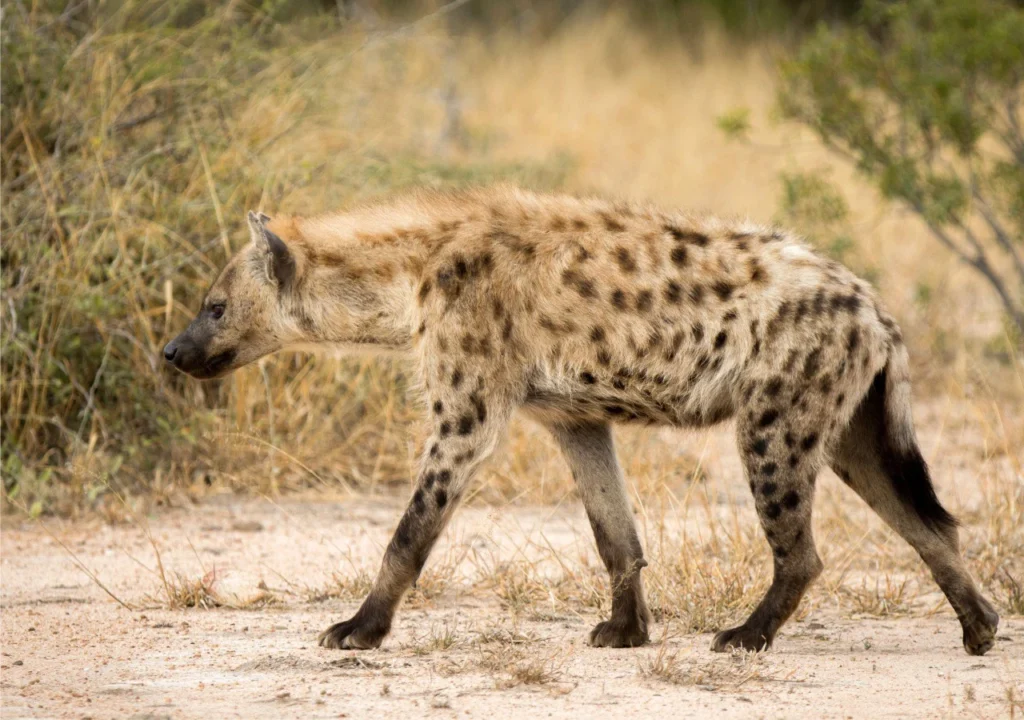
Three wild dogs made a brief appearance at the start of the week, but it was the hyenas who treated our guests to a thrilling territorial dispute. On an early morning game drive, not far from camp, we got a long-range visual of 2 hyenas pursuing a third towards us. We lost sight of them for a while, but after following the distressed calls of the victim, we came upon the trio at the river crossing south of camp. The two aggressors had pinned their victim down and were using their powerful jaws to clamp down on his head and neck. Houdini Hyena somehow managed to escape their vice-like grip before bolting off in the direction of Bateleur Safari Camp. When we found them just outside camp, it was clear that the power had shifted. Four clan members had responded to the victim’s distress calls, and five hyenas were now attacking the initial two aggressors. The clan members chased the two intruders away between the camp itself and the staff quarters until they disappeared into the bush, and order was restored.
On the same afternoon as the black mamba incident, we enjoyed a high-quality sighting of a lioness stalking kudus close to Nyala Pan; unfortunately for her, she was unsuccessful, but soon after and to the delight of our guests, she was joined by four younger lions. The Sark Breakaway Pride again provided us with several excellent sightings, including time spent with them over a couple of days at their buffalo kill, and watching them relax and interact in a dry riverbed.
Early one morning, we picked up the tracks of the Mayambula Pride moving northeast. After tracking them for quite a while, we located the pride of 14 beautiful lions at Piggy Pan, relaxing with obviously full bellies. That encounter was made even more pleasurable by a herd of elephants that came down to drink while we spent time with the lions. The pride was still at Piggy Pan that afternoon, and we were able to spend a long time with them until the hour arrived for us to relocate for sundowners.
At the risk of sounding trite, the Bateleur guests once again experienced an abundance of elephant sightings, both breeding herds and large solitary bulls. The rhinos also provided excellent photo opportunities, especially a cow with her calf and a solitary bull enjoying a mud bath. Menacing dagga boys kept a close eye on us on several occasions, always on the lookout for potential threats when they’re not within the relative safety of the main buffalo herd.
As for the leopards, they were the complete opposite – always happy to be alone and very comfortable and relaxed whenever we enjoyed quality sightings of them. Whilst every species in the African bush faces a constant battle for survival, for some it appears a little easier than for others.
Breathe Africa – Bateleur Safari Camp.