
Meet the owner
Andreas Liebenberg
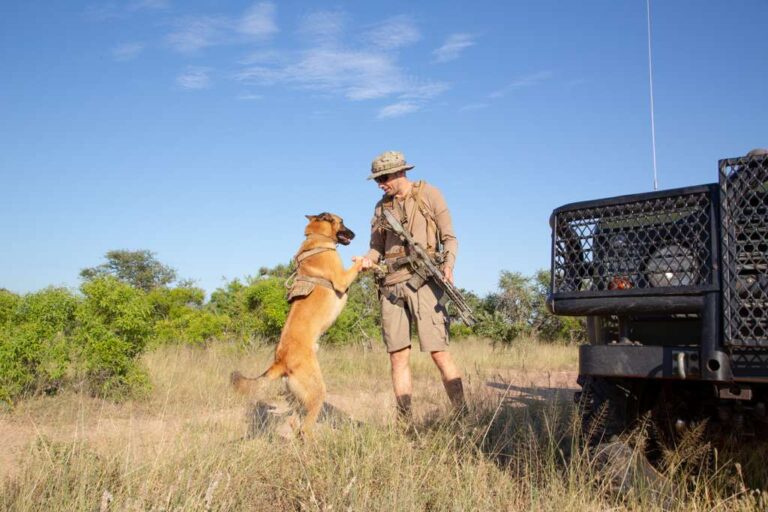
Andreas has owned Bateleur since 1991 and has shaped every part of it, from the design of the camp to guiding guests on specialist itineraries. With over 20 years in conservation and a background in tracking and anti-poaching, he has twice received the Timbavati Private Nature Reserve’s conservation award for the most eco-sensitive landowner.
The Season of New Life: Newborn Impala in the Timbavati
The arrival of thousands of baby impalas is one of the most remarkable events of the African bushveld calendar. As spring turns to summer across the Timbavati Private Nature Reserve, the landscape is once again filled with the sight of newborn impalas taking their first tentative steps.
For Bateleur Safari Camp guests, this is a particularly special time of year. The bush is alive with new life, and watching these little antelope find their feet, stay close to their mothers, and begin exploring their surroundings is a wonderful reminder of the constant cycle of life in the African bush.
Impalas have a fascinating reproductive strategy that gives their young a better chance of survival. After a gestation period of approximately six to seven months, females generally give birth to a single calf. In Southern Africa, births are remarkably synchronised, with research suggesting that as many as 80% of impala lambs may be born within a period of two weeks, usually towards the end of spring and the start of summer.
This synchronisation is no coincidence. By timing their births to coincide with the beginning of the rainy season, impalas ensure that nutritious young grass and fresh vegetation become increasingly available as the calves grow. It also means that predators are suddenly faced with an abundance of young prey animals, affording each individual calf a better chance of survival.
Before giving birth, a female will usually separate herself from the herd and seek a secluded spot in the surrounding bush. Birth generally takes place during daylight hours, often around midday. This gives the mother and her newborn several hours to establish their bond before sunset signals the start of increased predator activity.
Newborn impalas are surprisingly capable. Within a relatively short time after birth, a calf can stand and walk, although its movements are initially rather unsteady. During the first few days, the mother will often leave her calf concealed in thick vegetation while she goes off to feed. She returns periodically to suckle it and maintain contact. Remaining hidden rather than constantly following its mother helps prevent the calf from attracting unwanted attention.
After a day or two, mother and calf will generally rejoin the herd. As more calves are born, they begin forming nursery groups, sometimes called crèches. These groups can contain a dozen or more youngsters that spend much of their time together resting, playing, and exploring, all under the watchful eyes of the adult herd.
There is safety in numbers. With so many young animals together, it becomes harder for a predator to isolate an individual calf, while the presence of several watchful adults provides an additional layer of protection.
Despite these precautions, the first few weeks of a young impala’s life remain extremely challenging. They are vulnerable to a variety of predators, including leopards, lions, cheetahs, hyenas, wild dogs, and even smaller predators such as jackals.
A young calf has very little ability to defend itself and relies almost entirely on camouflage, concealment, and the protection of its mother and herd. Even once it begins moving around with the other youngsters, it must quickly develop the speed, coordination, and agility needed to escape danger.
Adult impalas are remarkably athletic, capable of leaping distances of up to 10 metres and clearing obstacles with impressive ease. These abilities, together with their characteristic high jumps and sudden changes of direction, are important survival tools that the youngsters will gradually develop.
For now, their survival depends on remaining alert, staying close to the herd, and making the most of the protection offered by their mothers and fellow youngsters.
The arrival of so many newborn impalas in the Timbavati is a wonderful spectacle and an important part of the natural cycle of the African bush. Over the coming weeks, these little antelopes will grow stronger, become more independent, and gradually master the skills needed to survive.
For those fortunate enough to witness this annual explosion of new life, it is a particularly special reminder that, even in an environment governed by the harsh realities of predator and prey, nature has developed some remarkable ways of giving the next generation a fighting chance.
Recent sightings
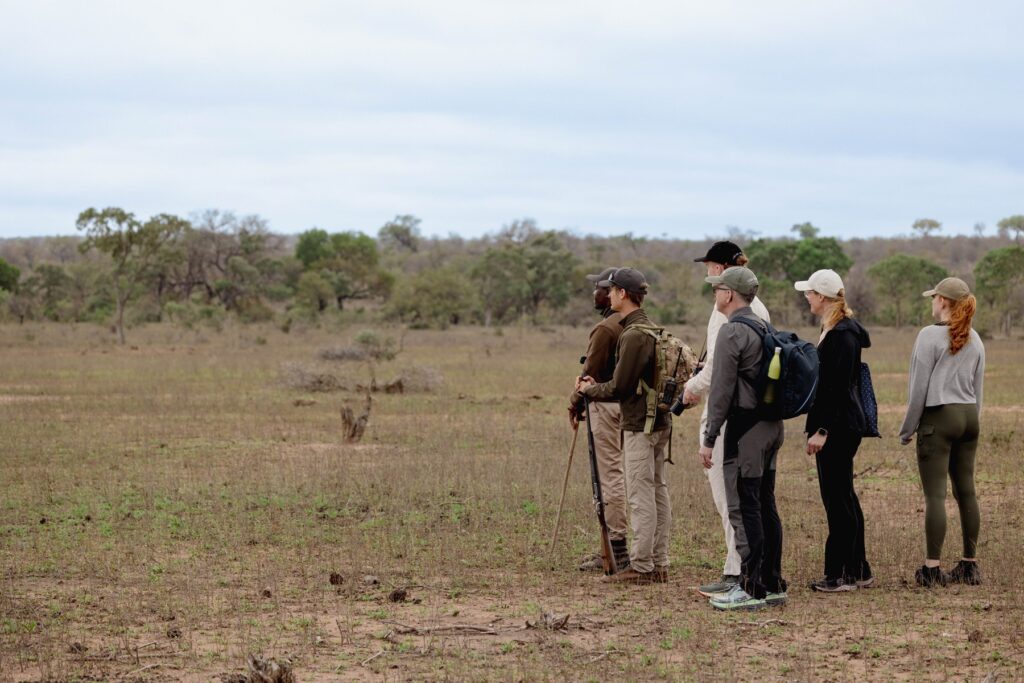
A morning bush walk provides a wonderful opportunity to focus on the finer detail of the African bushveld whilst following in the footsteps of giants. During the second week of November, our bush walkers watched breathtaking sunrises, observed graceful plains game, tracked a herd of elephants, encountered a bull rhino on foot, and ultimately enjoyed the tranquil sight of their quarry drinking from pans and waterholes in the morning sunlight.
Elephant activity was very high, so much so that one of our trackers had to abandon his solo search for a herd of buffalo because the thick bush he was carefully negotiating on foot concealed so many of the grey giants. But our guests did get to enjoy multiple elephant sightings from the safety of the game-viewing vehicles, including a herd right outside camp, and another herd sharing a waterhole with 3 rhinos and a hippo. There were rhino and buffalo sightings aplenty, predominantly in ones and twos, but we did have a few encounters with small herds of buffalo.
It was also a very busy week for hyena sightings. We visited one of the active den sites and encountered 2 adults watching over 2 sets of cubs – an older group of 3 cubs, and a younger group of 2 that were still very dark in colour. Most of our other hyena encounters were “on the prowl” during the afternoon-evening drives, but we did come across one munching on a zebra skull and another engaged in an uneasy truce with a leopard as they both fed on the same impala kill. In addition to being expert hunters, hyenas are great opportunists and would never pass up a free meal.
Leopards, on the other hand, are not usually so accommodating, and there must have been a good reason for him to share his dinner with the sworn enemy. We also enjoyed 3 other high-quality leopard sightings, with two of the big cats reclining in trees right next to the road, and one posing for photos in the middle of the road as we made our way back to camp after dark.
Not a day passed last week without a lion sighting for the Bateleur guests, a stat that will always bring smiles to the faces of the hard-working guides and trackers. We spent quality time with the River Pride at the beginning and end of the week, and also encountered one of the River Pride females mating with one of the big Mkhombo males. Other noteworthy encounters include observing the Sark Breakaway Pride with their cubs, watching a pride being woken from their afternoon slumber by a flock of noisy guineafowl, and listening to a lioness contact calling nearby during our sundowner stop, before boarding the safari vehicle and using the spotlight to find her in the darkness.
There was also plenty of action for the birdwatchers, from beautiful lilac-breasted rollers and striking violet-backed starlings to juvenile Bateleur and Martial eagles and an imposing Tawny eagle. The South African summer is an exciting time for birdlife in the Timbavati Private Nature Reserve. As the rains arrive and insect numbers increase, the bush comes alive with more than 50 species of migratory birds from Europe, Asia, and elsewhere in Africa. There are few better places for a twitcher to be.
Breathe Africa – Bateleur Safari Camp.