

Meet the owner
Andreas Liebenberg
Andreas has owned Bateleur since 1991 and has shaped every part of it, from the design of the camp to guiding guests on specialist itineraries. With over 20 years in conservation and a background in tracking and anti-poaching, he has twice received the Timbavati Private Nature Reserve’s conservation award for the most eco-sensitive landowner.
A Feast After the Rain: Flying Termites in the Timbavati
One of the many spectacular sights in the African bush is thousands of flying termites emerging from their underground colonies following the first good rains. Triggered by the weather conditions over the middle weekend of November, the Timbavati Private Nature Reserve has recently experienced an abundance of these fascinating insects, providing a wonderful natural spectacle and a real feast for many of the reserve's inhabitants.
Scientifically known as alates, flying termites are simply the reproductive members of an established termite colony. Unlike the workers and soldiers that remain in the mound, these winged males and females have a very specific purpose: to leave their parent colony, find a mate, and establish a new colony elsewhere.
Rainfall plays a significant role in triggering this remarkable event. The combination of moist soil, warm temperatures, and favourable atmospheric conditions provides the ideal opportunity for flying termites to emerge. The softened ground also makes it easier for newly paired termites to burrow underground and establish their own nests.
Many termite species synchronise their flights so that thousands, sometimes millions, emerge within a relatively short period. This increases the likelihood of males and females from different colonies finding one another and successfully reproducing.
Once airborne, the termites are not the best fliers and generally travel short distances, often relying on the wind. After landing, a male and female pair up, shed their wings, and search for a suitable place to burrow. The successful pair becomes the king and queen of a new colony, with the queen eventually developing the remarkable ability to lay thousands of eggs.
Despite their enormous numbers, the odds of survival for an individual flying termite are incredibly low. Their emergence creates a feeding frenzy for an extraordinary variety of predators.
Birds are among the most obvious beneficiaries, and most insect-eating birds take advantage of the abundance. During the first few days after the rains, our guests witnessed several birds of prey feeding on flying termites, including Wahlberg's and Bateleur eagles. But the winged treats are equally attractive to bats, frogs, toads, lizards, geckos, spiders, and other insects. Ants are particularly effective predators, often gathering around termite emergence points to catch those that land nearby. Small mammals also benefit from the sudden availability of this nutritious food source.
Those termites that escape the predators still face considerable challenges. Many die from exhaustion, dehydration, or injury, while others fail to find a suitable mate or a place to establish their new home. Even successfully paired termites face threats from ants, other invertebrates, fungal infections, and competition from neighbouring colonies. So, the reality is that only a tiny fraction of the original swarm will ever establish a successful, self-sustaining colony.
Although the individual termites face overwhelming odds, their mass emergence is an important ecological event. It provides a temporary but abundant food source for numerous species, helping sustain the intricate food webs of the African bush.
Termites themselves are also essential ecosystem engineers. Their tunnelling improves soil structure, promotes water infiltration, and helps recycle organic material and nutrients.
So, the next time thousands of flying termites appear after a good rainfall in the Timbavati, remember that you are witnessing much more than an insect swarm. You are seeing an extraordinary example of nature's timing, survival, and interconnectedness, and a feast that many of the bush's inhabitants will eagerly welcome.
Recent sightings
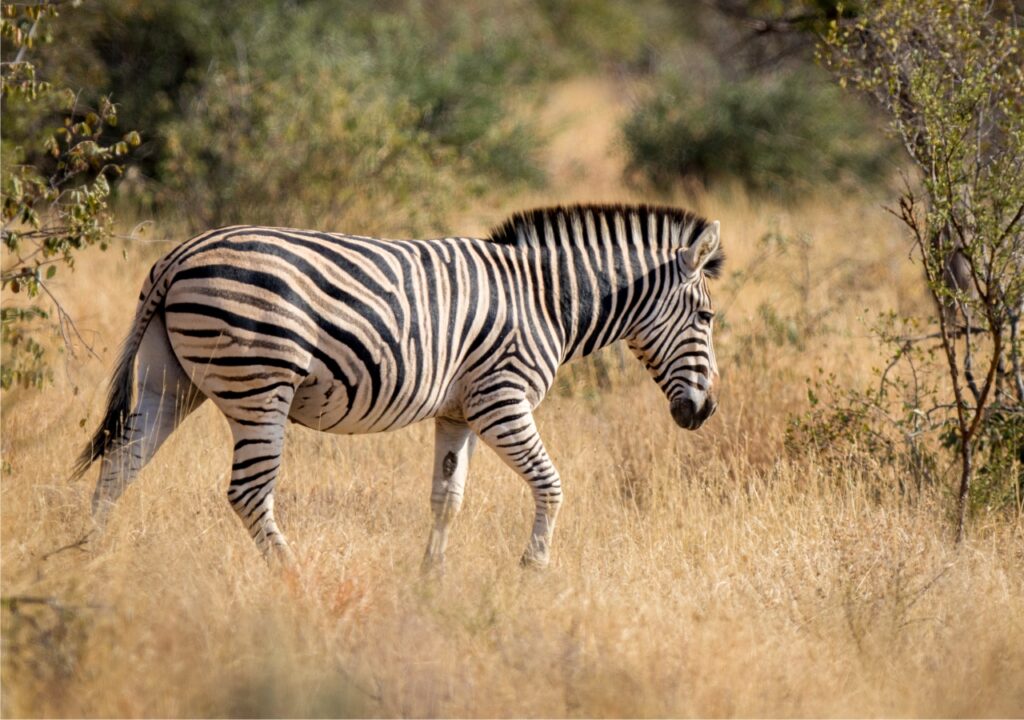
It was a warm, late-spring week in the Timbavati. Temperatures frequently exceeded 30°C, and by the end of the week, our guests chose to skip their morning coffee breaks as the mercury rose towards 37°C. But the early morning bush walks still went ahead almost daily, revealing multiple treasures such as baboon spiders, zebras, giraffes, duikers, and impalas with their recently born lambs. We also saw an abundance of birdlife, including Saddle-billed storks, Southern Ground Hornbills, and both white-headed and hooded vultures. The bush walks are very popular and provide a perfect opportunity for the guides to impart their extensive “track & sign” knowledge to the guests, akin to reading the African Bush’s daily newspaper to discover what transpired under the cover of darkness.
A follow-up on a previous bush walk discovery gave our guests some insight into the brutality of the bush. In the area where we recently found an ostrich nest with 12 eggs, all that remained were the fragments of eggshells and the telltale tracks of a destructive clan of hyenas.
The cackling carnivores were in the thick of the Timbavati action as usual. One interrupted our morning coffee break, racing past us in hot pursuit of one of the many baby impalas. Another tried to infiltrate a group of 4 rhinos that were feeding about 15 meters from our stationary vehicle. And a third pushed his luck too far with a herd of elephants at Rock Fig Pan, incurring the ire of a big bull that sent him scampering off into the bush.
As always, the plains game was in glorious abundance, including lots of impala lambs, a group of 7 kudus, and a pair of mating giraffes. Sightings of the “scary little guys” included a pair of African wild cats, a pair of honey badgers, a lone genet, and, to the delight of the Bateleur guests, two separate sightings of jackal puppies. The guests also relished the sight of a big herd of buffalo taking flight when the unwitting bovines stumbled upon one of the big Mhkombo male lions lying on the opposite side of the gravel road. Make way for the king!
The 2 Mhkombo males made a few appearances, and by the end of the week, we had enjoyed 3 beautiful sightings of them with the full Sark Breakaway Pride, including the 7 cubs.
Early one morning, we picked up the tracks of 6 lionesses from the Mayambula Pride on the Bateleur Safari Camp entrance road. We followed their tracks until we found the big cats close to one of the nearby Timbavati airstrips, where they remained for the rest of the day. But it was the River Pride that was perhaps most accommodating, providing our guests with some incredible encounters, including about 25 minutes spent with 4 of the lionesses and 2 of the younger males.
The leopards proved to be more elusive this week, but we still enjoyed three memorable encounters, including a magnificent big male in the middle of the road. In the morning sunshine, we also watched a very relaxed female leopard attempting to sample the Timbavati’s abundant buffet of impala, but luck was not on her side.
There are lots of elephants in the Timbavati at the moment, and we enjoyed multiple daily sightings, including a few huge herds. On two of those occasions, the big herds were accompanied by a crash of rhinos, a beautiful collective name that reflects the loud, heavy sound these large animals make when moving through dense brush. Rhino sightings were plentiful, but perhaps the rhino highlight of the week was watching 3 hefty beasts all rolling in the mud while we sipped our drinks and watched the beautiful sunset reflected in the water of one of the dams. Paradise on earth.
Breathe Africa – Bateleur Safari Camp.