
Meet the owner
Andreas Liebenberg
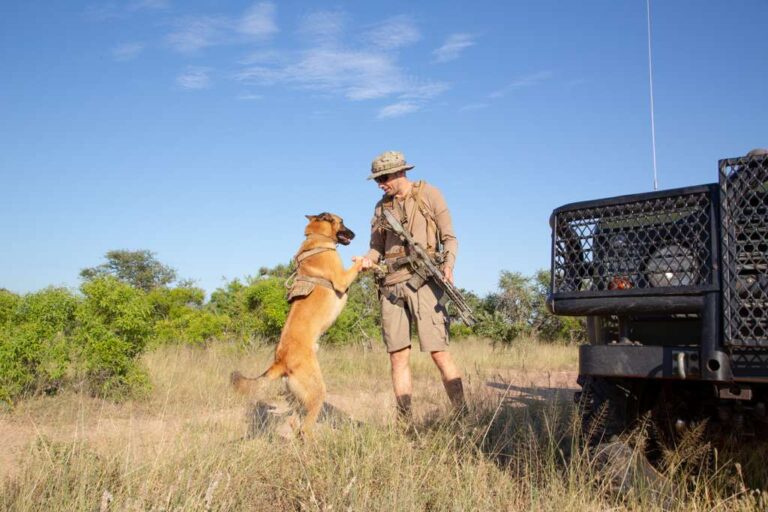
Andreas has owned Bateleur since 1991 and has shaped every part of it, from the design of the camp to guiding guests on specialist itineraries. With over 20 years in conservation and a background in tracking and anti-poaching, he has twice received the Timbavati Private Nature Reserve’s conservation award for the most eco-sensitive landowner.
Old Warriors of the African Bush: Dagga Boys of the Timbavati
Among the most imposing sights in the African bush is an old Cape buffalo bull, standing alone in the golden grass or wallowing in a muddy pool. His heavily ridged horns, broad boss, and weathered appearance tell a story of years spent surviving the challenges of life in the unforgiving wilderness. A typical mature bull weighs around 700–800 kg, although particularly large individuals can even exceed 900 kg. Despite their size, buffalo can reach a top speed of around 55 km/h during a charge or when fleeing danger. That’s an enormous mass of “wild beef” travelling at speed.
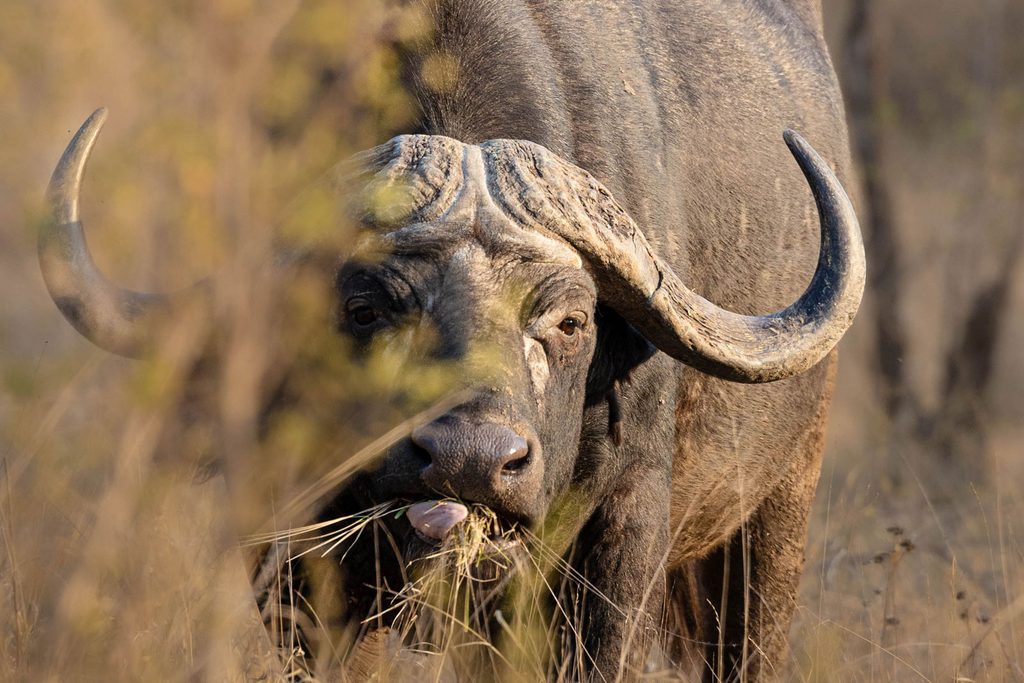
In South Africa, these formidable old males are affectionately known as “dagga boys.” The name originates from the word dagga, meaning mud in some of the local languages. It refers to the buffaloes’ fondness for wallowing in muddy waterholes and pans. These mud baths help them regulate their body temperature and may assist with controlling ticks and other external parasites. For an ageing bull, a muddy wallow can be an ideal place to cool down and rest away from the activity of the main herd.
The best current estimate places approximately 55 000 – 60 000 Cape buffalo across the Greater Kruger conservation area, including Kruger National Park and the adjoining private reserves such as the Timbavati Private Nature Reserve. They are highly social animals, often gathering in large herds consisting mainly of females, calves, and younger animals, accompanied by some mature breeding bulls. As males grow older, however, their social circumstances change. Some lose their position in the breeding hierarchy, while others gradually spend more time away from the main herd. Eventually, they may join a small group of older bulls or live a solitary existence. These individuals are the classic dagga boys of the African bush.
Their behaviour can be deceptive. An old bull may appear completely relaxed, spending long periods grazing, resting, or chewing his cud. He may seem indifferent to the world around him, yet years of experience have taught him to be alert to potential danger. Ageing bulls may also have old battle wounds, worn teeth, or impaired hearing and eyesight. They often favour areas close to water and may seek out softer vegetation that is easier to graze.
Despite their unhurried appearance, dagga boys command enormous respect. Unlike buffalo within a large herd, a solitary bull has fewer companions to help detect or deter danger. He is also more vulnerable to predators, particularly lions. Without the protection of the herd, he must rely on his own strength and judgement when threatened. In cowboy parlance, a dagga boy is most likely to shoot first and ask questions later.
If surprised, cornered, injured, or approached too closely, a dagga boy can react with remarkable speed and aggression. His powerful build, formidable horns, and willingness to defend himself make him one of the most dangerous animals to encounter on foot. Buffalo are not necessarily aggressive at every encounter, but their reactions can be difficult to predict, and an apparently calm animal should never be underestimated.
For Bateleur guests in an open safari vehicle, encountering one or more dagga boys is an awe-inspiring privilege and an opportunity to observe one of Africa’s great survivors at close quarters. Beneath that mud-covered, seemingly unhurried exterior lies an animal shaped by years of competition, hardship, and survival.
Recent Sightings
As has been the pattern for the past few weeks, we enjoyed excellent sightings of a small group of 4-5 dagga boys on more than one occasion. The main breeding herd of buffalo was never far away and gave us one memorable encounter on the eastern side of the property. It was also a week of multiple high-quality elephant sightings, most notably several good-sized herds as well as a magnificent lone bull that we encountered on foot during a morning bush walk close to Pac Pan.
Our walking guests experienced the wonder of the African bush from a whole new perspective, and, on separate walks, they just missed out on visuals of a male leopard and a lion. Nothing gets the pulse racing more than tracking these magnificent big cats on foot for extended periods! Tracking the wildlife from the vehicles proved more successful, producing a beautiful sighting of 3 rhinos at sunset and a memorable hour spent with the Mayambula pride of lions as they showed some half-hearted interest in a nervy herd of impala.
We also enjoyed several other lion sightings during the week, including a lovely lioness on Cheetah Plains, a pair of lionesses and subsequently 3 lionesses with a big male at Rock Fig dam, another mating pair of lions on Giraffe Plains, and some quality time spent with the Sark Breakaway pride and their seven cubs.
Our leopard sightings all came in the first few days of the week. It started with a sedentary female one morning, and then that afternoon, a very relaxed female allowed us to spend a lot of time following her as she went about her business in the bush. The following afternoon, we found a beautiful male in a tree not far from camp, and the next morning, a large, mature male posed elegantly for photos in the middle of the road.
It was a good week for rhinos and giraffes, and the beautiful plains game was in abundance as usual. The heat resulted in excellent raptor sightings, and we again saw captivating Bateleur eagles from which the camp derives its name. Aside from multiple encounters with ostriches and countless smaller species, the birders were also rewarded with Southern Ground Hornbills, a member of the Big 6 Birds of South Africa.
The afternoon temperatures in the Timbavati pushed 30°C throughout the week, and the nights are getting milder as we move closer to summer. When the proper summer rains arrive, we can look forward to regular afternoon thunderstorms which will bring a welcome break to the heat on any given day. What an incredible time to be in the African bush!
Breathe Africa – Bateleur Safari Camp.