
Meet the owner
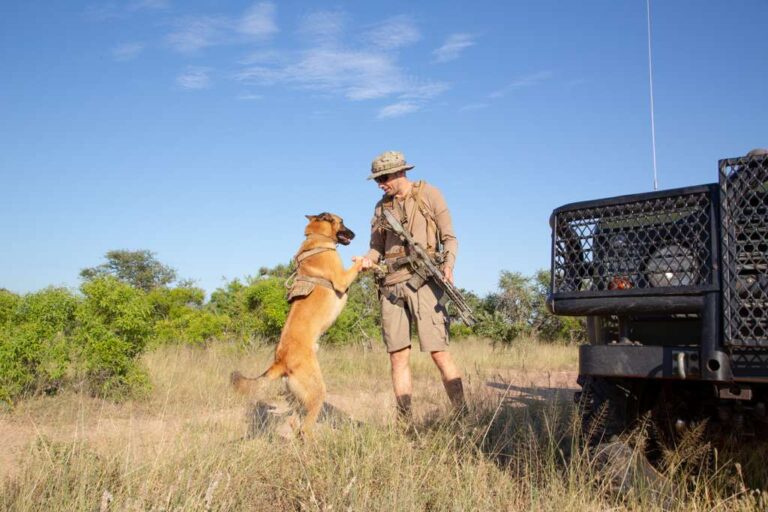
Andreas Liebenberg
Andreas has owned Bateleur since 1991 and has shaped every part of it, from the design of the camp to guiding guests on specialist itineraries. With over 20 years in conservation and a background in tracking and anti-poaching, he has twice received the Timbavati Private Nature Reserve’s conservation award for the most eco-sensitive landowner.
The Sark Breakaway Pride: A New Generation of Lions in the Timbavati
The African bush is a place of constant change, where the fortunes of a mighty pride of lions can shift dramatically in a relatively short space of time. The story of the Sark Breakaway Pride in the Timbavati Private Nature Reserve is a fascinating example of this, with new arrivals, dramatic departures, shifting loyalties, and, most recently, the arrival of seven young cubs.
The Sark Pride first moved into the area from the neighbouring Klaserie Private Nature Reserve sometime during 2024. Initially numbering around 14 or 15 lions, the pride soon began to grow, eventually reaching a peak of 18 members.
At its height, the pride comprised six adult females, two large subadult males, four male and three female cubs, and three very young cubs, of which only one ultimately survived. It was a substantial pride, with several generations living together.
However, life in the bush is rarely predictable. Following the collapse of the resident coalition of the five Vuyela males, the two Mkhombo males arrived from the Klaserie in approximately mid-2025. And their arrival brought significant changes to the Sark Pride.
Dominant male lions often kill cubs when they take over a pride, primarily to ensure that they can father the next generation of cubs and pass on their genes. This behaviour is known as infanticide, and it is a natural, although brutal, part of lion social behaviour. Faced with the very real threat of the new dominant males, most of the Sark pride fled from the Timbavati, heading south and west within the Greater Kruger Park with their various-aged cubs.
Three Sark females, however, remained in the area. The two Mkhombo males quickly established themselves and mated with the remaining Sark females. After a gestation period of about 3½ months, in February 2026, two of the females gave birth to a total of seven cubs, marking the beginning of a new generation.
Today, the Sark Breakaway Pride consists of two dominant males, three females, and seven young cubs, currently 7 months old. Bateleur Safari Camp guests have enjoyed multiple excellent sightings of these majestic big cats over the past month, feeding on zebra and wildebeest kills, relaxing in the dry riverbeds, wandering down the sandy gravel roads and game paths, and reuniting after a night on the prowl.
For those who are fortunate enough to encounter this pride during a guided game drive or bush walk in the Timbavati, the sight of five adult lions in their prime with seven young cubs in tow offers a wonderful glimpse into the ongoing cycle of life in the African bush. Their arrival represents a new chapter for a pride that has experienced considerable change over the past two years. As the cubs grow and the dynamics of the pride continue to evolve, it will be fascinating to see what the future holds for the Sark Breakaway Pride in the Timbavati.
Recent Wildlife Sightings in the Timbavati
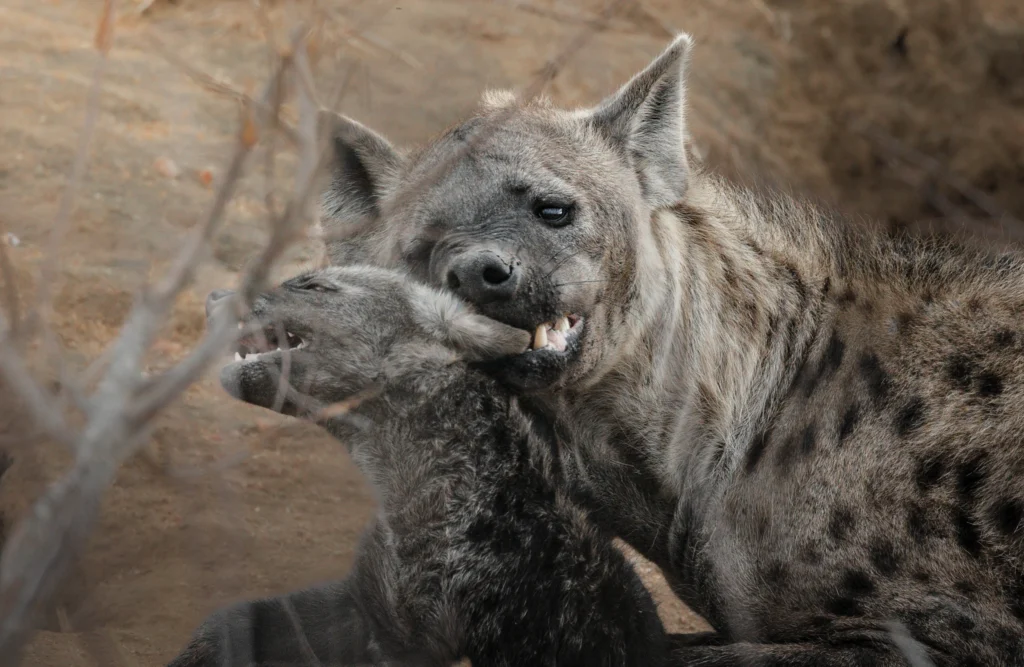
Early in the last week of September, the Bateleur guides and trackers located a new hyena den site under a big leadwood tree. It will take time to determine the composition of the resident clan, but the Timbavati’s hyena population is clearly in very good health, and our guests continue to enjoy regular sightings.
Plains game was plentiful during the week, with giraffes and zebras particularly prolific. These species comfortably share habitats because they do not compete for food resources, and they help each other spot predators.
During a sundowner drinks stop, one group of Bateleur guests was treated to one of the less common sights of the African bush – two giraffes mating. In a unique courtship process, the male curls his upper lip to pass the scent of the female’s urine to a special organ on the roof of his mouth to detect if she is fertile. The actual mating happens very quickly and lasts only a few seconds, but it is a sight that our guests will never forget.
After twice witnessing the aerial hunting prowess of the Martial Eagle during the previous week, it was the turn of the African Hawk Eagle to impress our guests with his catch of a Swainson’s francolin. This was one of many raptors that we had the pleasure of observing, but the Big 6 Birds of South Africa kept a low profile.
As has been the pattern for many consecutive weeks, our guests were treated to many and varied sightings of elephants, including a herd grazing right outside the camp and four bulls enjoying a mud bath at Nyala Pan. We also encountered many rhinos and buffalo, with perhaps the highlights being a rhino cow with her calf and a group of 6 dagga boys wallowing in the mud at a waterhole.
After a quiet start to the week, the same pack of 4 wild dogs was seen in six different locations over a period of 5 days, highlighting their range and speed over the ground when hunting. For now, the cheetahs seem to have moved off in search of less competitive hunting grounds, probably in no small measure due to the active presence in the area of wild dogs and also the other big cats. Cheetahs run from other large predators because they are built strictly for speed rather than physical combat. They lack the muscle mass and bone strength of lions and leopards, and they will almost always be outnumbered by even a small pack of wild dogs. An injured cheetah could face starvation, making retreat the safest option.
The week started off very well from a leopard perspective, with four good sightings in the first 3 days, but things quietened down after that. Later in the week, we twice tracked female leopards, but in both cases our elusive quarry melted into the dry, brown bushveld before we could get a visual.
Which brings us back to where we started, with the lions, and specifically, the Sark Breakaway Pride. These beautiful big cats were particularly cooperative during the last full week of September, affording the Bateleur guests high-quality sightings every single day. The lionesses and young cubs made an appearance every day and treated us to wonderful photo opportunities over the weekend as they lazily fed on their zebra kill. Predictably, given that there was food on the table, they were joined by the two dominant males, allowing our guests to see all 12 members of the pride at the same time. The Mayambula Pride proved to be far more elusive, but we tracked them one afternoon and enjoyed a beautiful sighting of 6 of the lionesses the following morning.
As always, nothing is guaranteed in the African bush, and it is both a privilege and an incredible experience just to be out amongst the wildlife and birdlife of the beautiful Timbavati Private Nature Reserve. But it is such a pleasure when the big cats decide to boldly declare their presence and regularly remind us of who is the king of the bushveld.
Breathe Africa – Bateleur Safari Camp.